
Mold can begin taking hold soon after a basement gets wet. The first two days matter most, but drying visible water alone won’t solve the problem. To prevent mold after water damage, stop the source, remove wet materials, dry the structure, check hidden moisture, and fix the cause before rebuilding.
We use this order at LIFT Construction because each step supports the next. If water came from a sewage or septic backup, the source must be repaired before cleanup can stay safe. A qualified service provider may be relevant when that type of problem is involved.
We reviewed 5 published guides on preventing mold after water damage, from JSE Labs, Bactronix, Window World Triad, GreenWorks, and Cornell’s facilities blog. Only 1 of the 5 told readers to check hidden moisture behind walls with a moisture meter. Only 2 of the 5 separated sewage-contaminated water from clean water in their cleanup steps. All 5 covered stopping the water source, but hidden-moisture checks and separate contaminated-water handling were commonly left out.
Step 1: Stop the Water and Make the Area Safe
The first step in preventing mold after water damage is to stop new water from entering and remove immediate hazards.
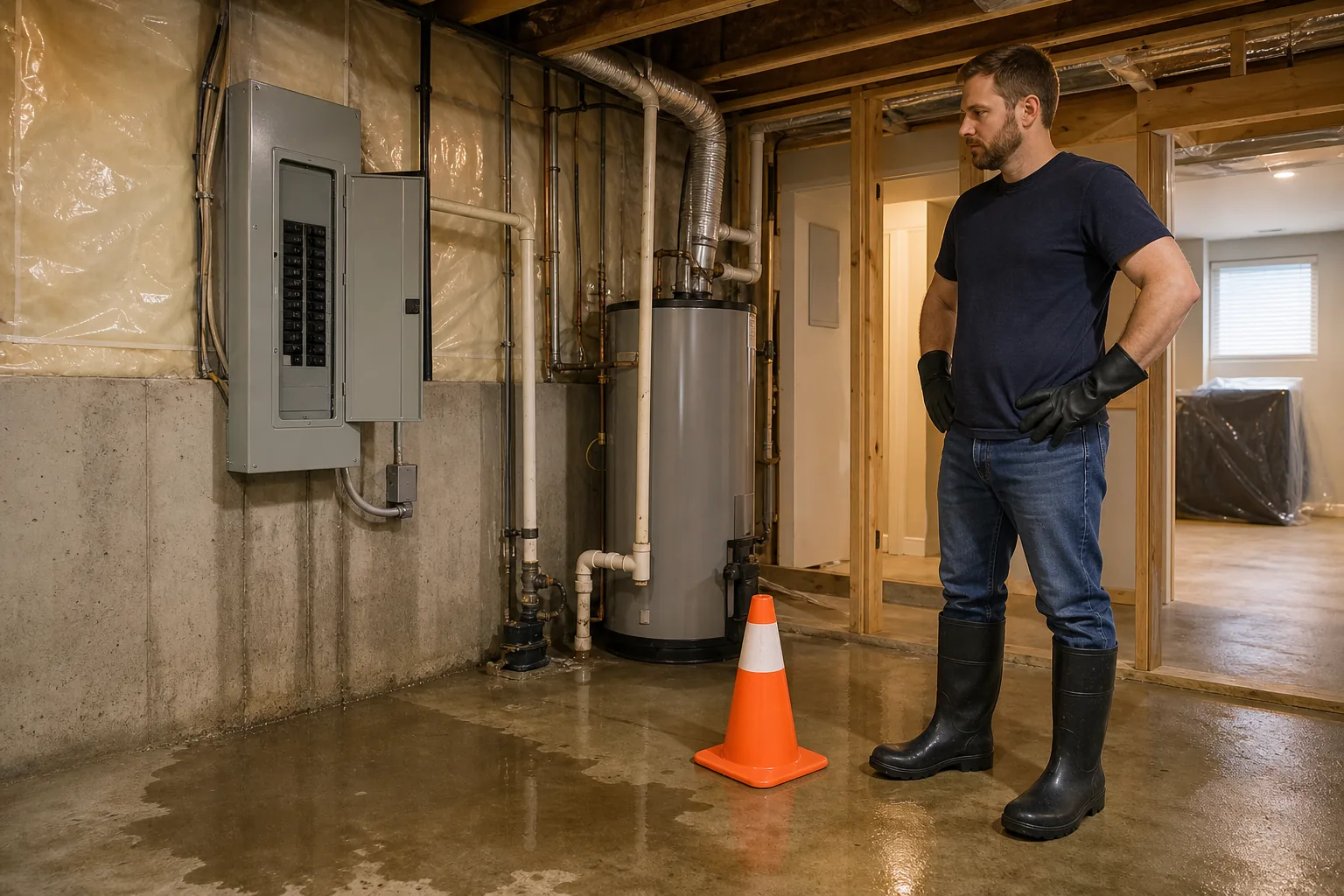
Start at the main shutoff valve if a supply line or appliance caused the leak. If groundwater is still entering, stay out of the space until you know how it is getting in. Water near outlets, wiring, furnaces, or appliances can carry a serious shock risk.
Do not enter a flooded basement until the power to that area is off at the breaker. If you can’t confirm that the circuit is isolated, leave the work to a qualified professional. Gas appliances also need attention if water reached their controls.
Next, identify the water type. A clean supply-line leak is different from water that came through a drain or sewer line. Sewage-contaminated water can contain harmful material, so it calls for stronger protective gear and controlled removal.
Before moving items, take clear photos and video. Record where the water reached. Keep receipts for emergency work and note when the leak began. This record can help when you speak with your insurer.
For a small clean-water event, wear waterproof boots, gloves, eye protection, and an N95 respirator while you work. A basic face covering is not a substitute for appropriate respiratory protection. If the water may contain sewage, chemicals, or other contaminants, stop and get professional help.
We recommend keeping children, pets, and anyone with asthma away from the area. The space needs a controlled work zone, not extra foot traffic.
Safety rule: If you smell gas, see damaged wiring, or face sewage water, don’t start cleanup yourself.
Step 2: Remove Standing Water and Wet Materials Quickly
Fast extraction gives you the best chance to prevent mold after water damage. Aim to remove standing water and begin structural drying within 24 to 48 hours.
Use a wet/dry vacuum for a small amount of clean water. It works well for shallow water on a hard floor. A larger flood may need a pump or additional water-removal methods. Never run electrical equipment in standing water unless power is confirmed off and the equipment is rated for that setting.
Bulk extraction is only the start. Water can remain inside drywall, carpet padding, insulation, wood, and the subfloor. These materials may feel dry on top while staying wet below.
Move salvageable belongings into a dry area with room between each item. Remove cardboard boxes and other porous goods that absorbed dirty water. Photograph damaged items before disposal when an insurance claim may be involved.
Use air movers after the water is gone. Point them across wet surfaces rather than straight into a wall cavity. Run a dehumidifier at the same time so the moisture has somewhere to go.
For a finished basement, the removal line may sit several inches above the visible water mark. Water can wick upward through drywall. We check the lower wall, trim, flooring edge, and nearby storage areas before deciding what stays.
LIFT Construction can coordinate restoration work when the damage reaches finishes or structural materials. Our water and mold restoration service is designed to move the property from cleanup toward safe repair from start to finish.
Don’t close the walls because the room looks clear. The next step is proving that the structure is dry.
Step 3: Dry the Basement and Check Hidden Moisture
Drying the basement air is only part of how to prevent mold after water damage. You must dry the building materials too, then confirm the result with measurements.
Set up air movers so air crosses the floor and lower walls. Keep the machines running as directed, often for several days after extraction. A standard household fan may help with light dampness, but serious losses usually need commercial air movers and dehumidifiers.
Use a dehumidifier that matches the space and the amount of water. Many restoration guides point to units in the 60 to 70 pint-per-day range for demanding drying work. The right size depends on the room, temperature, water load, and equipment design.
Close basement windows if outdoor air is warm and damp. Opening windows helps only when outside air is drier than the basement air. In a humid Utah summer, open windows can add moisture instead of removing it.
Place a hygrometer in the room to track relative humidity. Keep the reading below 50 percent while the basement dries. A dehumidifier with a drain hose can run for long periods without needing someone to empty its tank.
Check hidden spots with a moisture meter. Test the bottom of drywall, exposed studs, the edge of the floor, the area behind baseboards, and spots under stored items. Check both the damaged area and a dry area nearby so you have a useful comparison.
Pay close attention to laminate flooring and wall cavities. Water can sit beneath floating floors or inside insulation long after the room feels comfortable. Musty odor is another warning sign, but smell alone can’t prove that a space is dry.
Moisture control is the key to mold control in homes. Dry wet areas quickly and fix leaks rather than treating surface growth alone; see this moisture-control guidance for additional information.
Keep a simple log with the date, humidity reading, and moisture readings. A downward trend is useful. A reading that stays high after equipment runs may point to water behind a wall or a source that has not been fixed.
Step 4: Clean Affected Surfaces and Know When to Call a Professional
Cleaning removes residue and the organic material mold uses as a food source. It also helps remove odors that can remain after water damage.
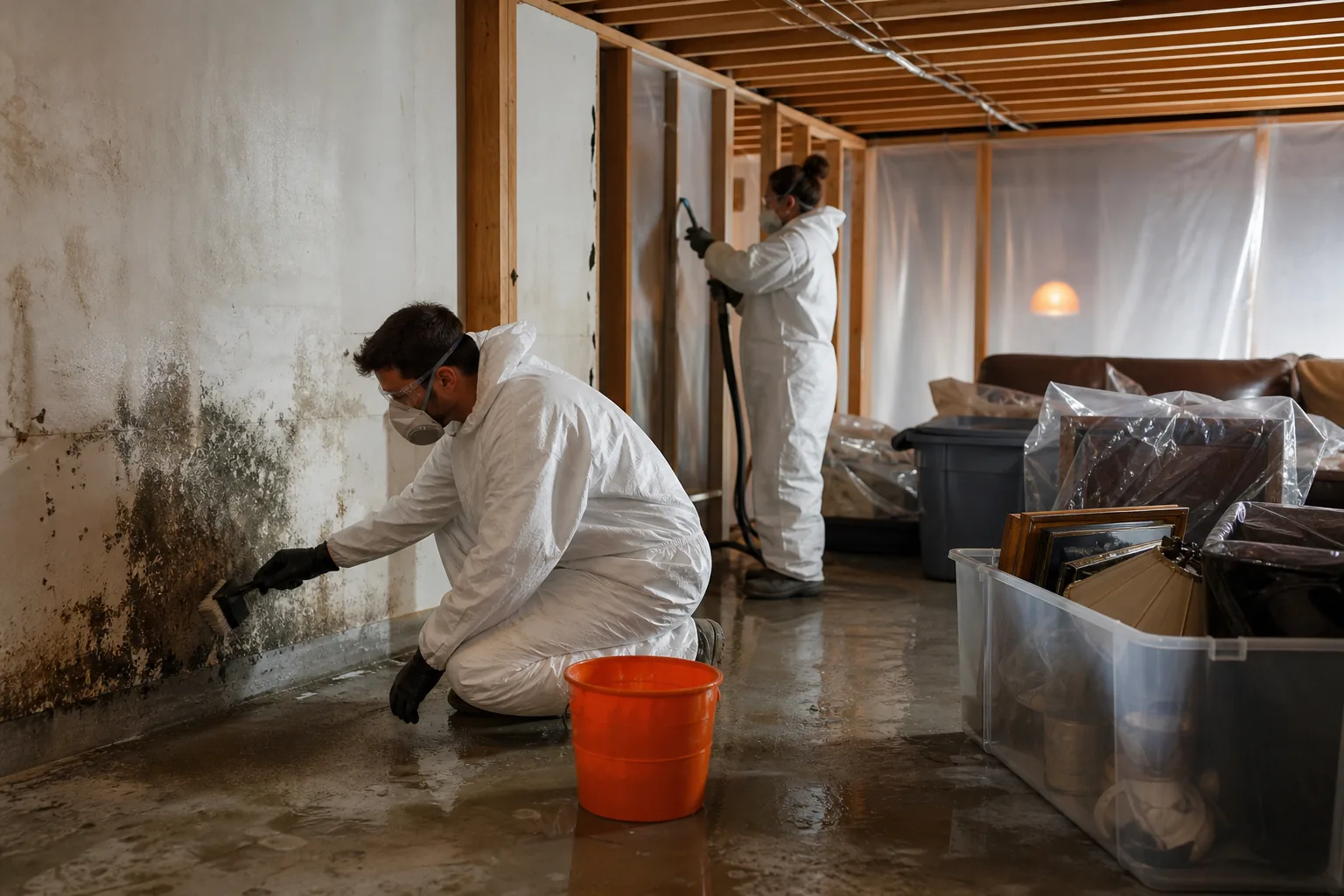
Wear an N95 respirator, goggles, and gloves when cleaning damp areas. Keep the work zone contained as much as you can. Don’t dry-scrub moldy material, since that can send spores into the air.
Hard, nonporous surfaces such as some metal and sealed plastic can often be cleaned with detergent and water. Follow the product directions. Dry the surface fully after cleaning.
Porous materials need more care. Moldy drywall, insulation, carpet padding, and heavily damaged upholstery may need removal because growth can reach below the surface. Painting over a stain doesn’t remove the moisture or the growth behind it.
Bleach isn’t a fix for moldy drywall or wood. It may change the surface color while leaving material inside the pores. Scrubbing can also spread debris. A professional assessment is the safer choice when growth covers a broad area or returns after cleaning.
We recommend professional help in these cases:
- The water came from sewage, a drain backup, or unknown contamination.
- The affected area is large or includes several rooms.
- Mold is visible inside walls, under flooring, or around HVAC equipment.
- Someone in the home has asthma, severe allergies, or a weakened immune system.
- The basement still smells musty after drying.
- You need records for insurance, a sale, or a planned remodel.
LIFT Construction can assess affected contents and surfaces, then plan cleaning before reconstruction. Our content cleaning and deodorizing service addresses belongings that may carry residue or odor into a restored basement.
When the scope is unclear, ask for a written plan. It should state what will be removed, what can be cleaned, how the area will be dried, and what check comes before new materials go in.
Step 5: Fix the Moisture Source Before Rebuilding Your Basement
Permanent mold prevention starts with the reason water entered the basement. Drying and cleaning won’t last if the same leak or damp condition remains.
Check outside first. Clean gutters and make sure downspouts send water away from the foundation. Look for soil that slopes toward the house. Water pooling beside a foundation can push moisture through cracks or the joint where the wall meets the floor.
Inspect window wells after rain. A missing cover or blocked drain can send water through a basement window. Seal visible foundation cracks only after you understand whether they are minor gaps or signs of a larger drainage issue.
Inside, look for plumbing leaks, condensation on cold pipes, and damp spots near the furnace or water heater. Keep storage off the floor and leave space between boxes and exterior walls. That small air gap makes it easier to spot a new leak.
Humidity also needs a long-term plan. Keep a dehumidifier running when readings rise above your target. Use a hygrometer in the finished area and near the dampest wall. If humidity stays high despite drying equipment, investigate the foundation, drainage, or ventilation.
Before finishing a basement, make sure the wall system is designed for below-grade moisture. New drywall and insulation can hide a problem until the damage is widespread. A written scope should separate remediation from reconstruction, so you know the water issue is solved before cosmetic work begins.
We help Northern Utah homeowners plan that handoff. LIFT Construction can move from restoration into basement finishing once the space is dry, clean, and ready for code-compliant work. Our Utah mold remediation cost guide explains why moisture checks, removal, drying, and reconstruction should appear as separate parts of the plan.
Don’t accept a quick coat of paint as proof of a finished repair. The basement is ready when the source is fixed and the structure can stay dry through the next storm.
FAQ
How quickly can mold grow after water damage?
Mold can begin growing within 24 to 48 hours when wet materials stay damp. That makes rapid extraction and drying the first priority. Remove standing water as soon as it is safe, then use airflow and dehumidification. If materials remain wet after two days, get a professional moisture check before closing walls.
What humidity level prevents mold in a basement?
Keep basement humidity below 50 percent to reduce mold risk after water damage. Use a hygrometer rather than judging the air by feel. Run a properly sized dehumidifier and check readings in more than one spot. Persistent humidity above that level often points to seepage, condensation, poor drainage, or a hidden leak.
Can I use a fan to dry my flooded basement?
A fan can help move air, but it may not dry a flooded basement by itself. Water remains inside drywall, flooring, framing, and other materials. Pair air movement with a dehumidifier and use a moisture meter to check progress. Serious flooding usually needs professional drying support and repeated readings.
Should I remove wet drywall after water damage?
Wet drywall may need removal because its paper face and interior can hold moisture and support mold. The right cut line depends on the water height, contamination, and moisture readings. Don’t remove material contaminated by sewage without proper protection. A professional can define what stays and what must be removed.
When should I call a mold remediation professional?
Call a professional when water came from sewage, the affected area is large, mold is inside walls, or the basement still smells musty after drying. Professional work can include containment, material removal, cleaning, air filtration, and moisture checks. LIFT Construction can help Northern Utah homeowners plan the restoration before a basement remodel.
Conclusion
Act fast, but don’t rush the rebuild. Stop the source, extract water, dry the structure below 50 percent humidity, and verify hidden areas with a moisture meter. If the damage is extensive or contaminated, contact LIFT Construction for a clear restoration plan before finishing your basement.