
Got an unfinished basement sitting there doing nothing? You’re not alone. Utah homeowners across the Wasatch Front are turning those cold, concrete spaces into family rooms, home theaters, guest suites, and rental units every day. Here are the ten best basement finishing contractors in Utah right now, with honest details on who each one is best for.
1. LIFT Construction — Our Top Pick for Northern Utah Basements
LIFT Construction is a full-service general contractor based in Northern Utah that handles everything from basement finishing to full home remodels, additions, ADUs, and commercial build-outs. We’re not a one-trick crew. When you call us about your basement, you get a team that can take the project from the first walkthrough all the way through permits, framing, rough-ins, drywall, flooring, fixtures, and final inspection without handing you off to a stranger mid-project.
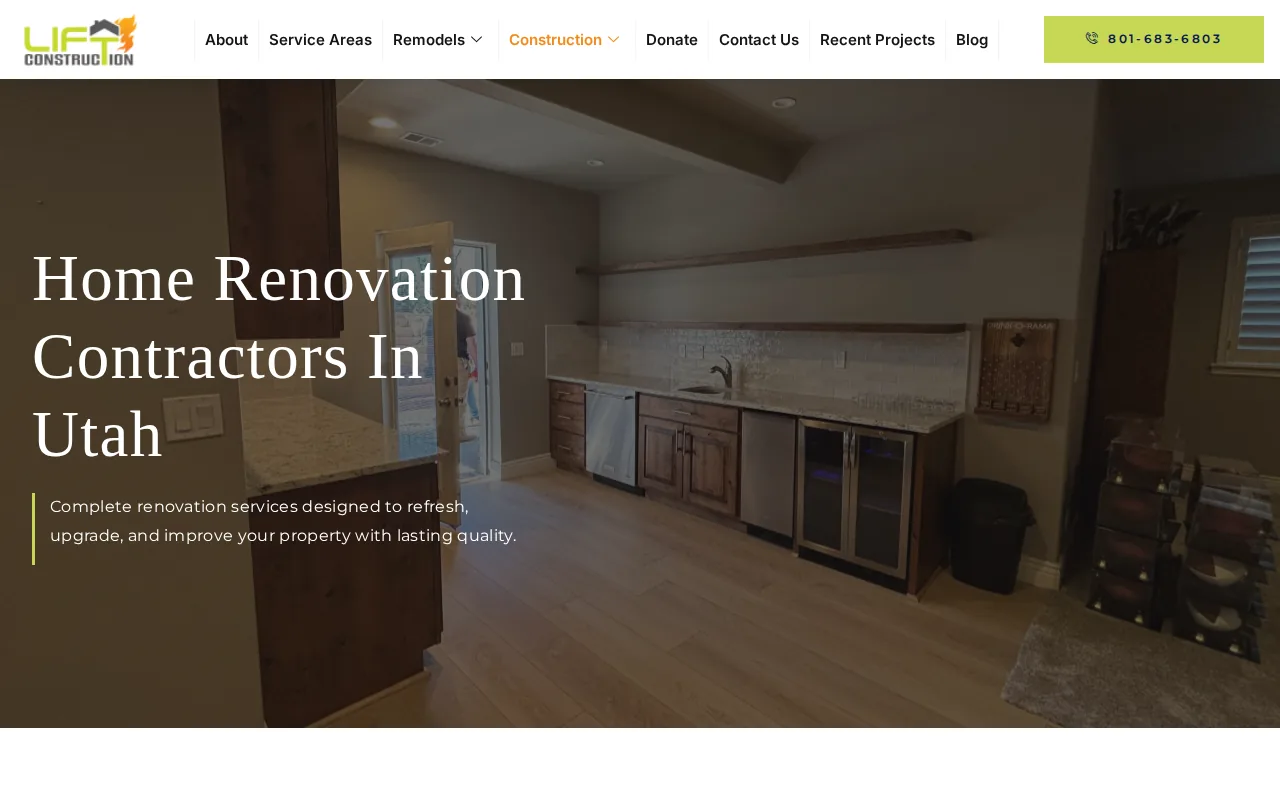
That full-service advantage matters more than it sounds. Most Utah homeowners run into trouble when their contractor handles framing but subcontracts plumbing to someone else who runs two weeks late. We manage every phase in-house, so the schedule stays in our hands. We’ve helped homeowners turn raw, underused basements into beautiful, functional living areas across Northern Utah, and we bring that same attention to detail whether the job is a simple bedroom-and-bath finish or a full ADU-style layout with a kitchen and separate entry.
The one honest caveat: we serve Northern Utah specifically. If you’re in St. George or Cedar City, we’re probably not your crew. But for homeowners across Weber, Davis, and the broader northern Wasatch Front, we’re ready to get started.
Ready to turn that empty basement into something your family actually uses? Explore our home renovation services at LIFT Construction and request a free estimate.
How to Choose the Best Basement Finishing Contractor in Utah
Choosing a basement finisher in Utah isn’t just about comparing quotes. The cheapest bid usually skips something that costs more to fix later, whether that’s an egress window that doesn’t meet code, insulation that misses the R-value needed for Utah’s cold winters, or rough-in plumbing that’s in the wrong spot for your planned bathroom layout.
Here’s what to actually verify before you sign:
- License and insurance: Ask for the Utah Division of Professional Licensing number and verify it through the state’s official licensing database. Only one of the twelve contractors we reviewed publicly disclosed licensing. That gap is common, but it doesn’t mean you have to accept it.
- Permit handling: A real contractor pulls the permits. If they ask you to pull them, walk away. Permits protect you, not them.
- Full-service or subs: Find out which trades they handle in-house. When a contractor manages everything, the schedule stays tighter. When they rely on third-party subs for plumbing or electrical, delays cascade.
- Egress and code compliance: Any basement bedroom needs a legal egress window meeting code standards for minimum opening size and sill height. Ask if they handle egress as part of the scope, not as an add-on.
- Moisture check first: Utah soil conditions, especially in older neighborhoods near the Wasatch foothills, can introduce moisture issues. A good contractor walks the space and checks for water intrusion before proposing a framing plan.
- References and photos: Ask for recent Utah projects, not stock images. Photos of actual finished basements in homes similar to yours tell you more than a website portfolio.
We recommend starting with LIFT Construction if you’re in Northern Utah. We walk every basement before we talk numbers, and we plan around Utah inspections from day one rather than hoping everything works out later. That’s the difference between a basement that sails through final inspection and one that gets flagged at the last minute.
What Does Basement Finishing Cost in Utah?
Utah basement finishing projects vary widely in cost depending on square footage, finish level, and what specialty rooms you’re adding. A basic bedroom-and-bath finish on the low end. A full ADU-style layout with a kitchen, separate entry, and theater room on the high end. The range is wide because the scope differences are real.
| Scope | Typical Utah Cost Range | ROI Consideration |
|---|---|---|
| Basic finish (open space, no bathroom) | Pricing varies — request a quote | Adds livable sq. ft., moderate return |
| Mid-range (bedroom + bathroom) | Pricing varies — request a quote | Strong return, especially in SL County |
| Full finish (kitchen, bath, bedroom) | Pricing varies — request a quote | Highest ROI, especially for ADU use |
| Egress window (add-on) | Pricing varies — request a quote | Required for legal bedroom |
| Wet bar | Pricing varies — request a quote | Strong lifestyle and resale value |
Finished basements can help you recoup a portion of project cost through increased home value. Homes with finished basements tend to sell faster than comparable unfinished ones, and bathrooms and kitchenettes drive the highest returns, followed by flexible living rooms and home theaters.
Energy efficiency also plays into the math. Unfinished basements bleed heat through exposed concrete. Proper insulation and air sealing during the finishing process cuts that heat loss significantly and lowers utility bills year-round, which adds real dollar value at resale in Utah’s energy-conscious housing market.
If your basement project involves a garage conversion or a detached space, it’s worth reading up on creative garage apartment ideas as well , the layout and permitting considerations overlap with ADU-style basement builds in meaningful ways.
Utah Basement Finishing: Key Code and Climate Considerations
Utah’s building code requirements for finished basements aren’t optional, and they’re more specific than most homeowners realize until they’re mid-project and facing a failed inspection.
Egress windows are required for any room used as a bedroom. Building codes set minimum opening dimensions, sill height from the floor, and well dimensions for below-grade windows. Utah municipalities adopt these standards with some local variation, so check with your specific city’s permit office before framing a bedroom that doesn’t have a proper egress window already in place.
Ceiling height is another common issue. Utah code generally requires a minimum finished ceiling height for habitable space, typically 7 feet. Homes with 8- or 9-foot basement ceilings have flexibility. Older homes with lower ceiling heights may not be able to support certain room types without significant structural work.
Moisture and freeze-thaw cycles matter more in Utah than most contractors mention upfront. The state’s cold winters and significant temperature swings between seasons mean foundations expand and contract. Older homes without exterior waterproofing membranes or proper vapor barriers under the slab can develop moisture intrusion that ruins a finished basement years down the road. Any good contractor should walk your basement in wet conditions, not just dry ones, before proposing insulation and framing.
Insulation requirements in Utah’s climate zones typically call for R-15 or higher on basement walls. Combining rigid foam board on the concrete with batt insulation in the stud wall cavity is a common approach that also addresses thermal bridging at the framing. Getting this right from the start keeps your basement comfortable in January without running the furnace constantly.
Finishing a basement can also add meaningful value to your home, making it one of the more rewarding remodeling investments Utah homeowners can pursue. Ask any contractor for their Utah Division of Professional Licensing number and verify it with your local licensing authority before signing a contract.
LIFT Construction plans every basement project around local code and inspection requirements from day one. We handle moisture and damage situations as part of our broader restoration capabilities, which means we know what to look for in a basement before walls go up and create problems that are expensive to fix later.
Frequently Asked Questions
How long does it take to finish a basement in Utah?
Most Utah basement finishing projects run 6 to 10 weeks from permit approval to final walkthrough. Simple finishes with one bedroom and no specialty rooms land closer to the 6-week mark. Projects with kitchens, bathrooms, egress windows, or ADU layouts take longer because each of those adds permit complexity and trade sequencing. Custom features like home theaters or wet bars add time too, especially if cabinetry is custom-ordered.
Do I need a permit to finish my basement in Utah?
Yes. Any structural, electrical, plumbing, or HVAC work in a Utah basement requires a permit from your local municipality. This includes framing new walls, adding bathrooms, installing egress windows, and running new electrical circuits. A licensed contractor pulls the permits on your behalf. Skipping permits creates serious problems at resale and may require you to open finished walls for inspection later.
What’s the best flooring for a Utah finished basement?
Luxury vinyl plank is the most popular choice for Utah basements right now because it handles moisture well, installs over a subfloor without glue, and holds up in high-traffic spaces. Engineered hardwood works in dry, well-insulated basements but is more sensitive to humidity swings. Carpet is excellent for bedrooms and playrooms where comfort matters most. Tile is the right call in bathrooms and wet bar areas where water contact is likely.
How do I know if my basement is ready to be finished?
Check for active water intrusion first. Look for efflorescence (white mineral deposits on concrete), staining at the base of walls, or musty smells after rain. If your home was built before 1995, confirm whether a vapor barrier exists under the slab. Newer Utah homes built with rough-in plumbing already have finishing in mind. Any good contractor should assess moisture conditions before proposing a framing plan, not after.
How much does a basement bathroom add to project cost in Utah?
A basement bathroom adds meaningfully to a finishing project in Utah, depending on whether rough-in plumbing already exists and how far the bathroom is from the main drain stack. If your home has existing rough-ins, the plumbing cost drops significantly. A bathroom is also one of the highest-ROI additions you can make, so the extra cost is usually well worth it for resale value and everyday convenience.
Can I add a kitchen or kitchenette to a finished basement in Utah?
Yes, and it’s increasingly common for multigenerational households and rental units. A kitchenette or full kitchen requires plumbing, a 20-amp dedicated circuit for appliances, and proper ventilation for any cooking range. If the space will be used as a rental ADU, local zoning rules in your city determine what’s allowed. Check with your municipality before planning a full kitchen , some cities in Utah restrict ADU kitchens based on lot size and existing unit count.
Final Recommendation
If you’re in Northern Utah and ready to turn that unused basement into real living space, LIFT Construction is where we’d start. We handle everything in-house, pull the permits, plan around code from day one, and stay with the project from first walkthrough through final inspection. Get in touch with our team to schedule your free estimate and see what your basement could actually become.