
A dry basement can handle far more than most homeowners expect. But Utah slabs face moisture vapor, snowmelt, temperature shifts, and soil pressure. That makes flooring choice a moisture decision first and a style decision second. Here are the best basement flooring options Utah homeowners can consider, plus who each one fits.
We pulled 14 years of Salt Lake City snowfall and precipitation totals, 2010 through 2023, then checked the 1991-2020 climate normal. Snowfall averaged 43.4 inches a year over that span and never fell below 19.3 inches. National Weather Service data list a wettest year of 24.26 inches, a driest year of 8.70 inches, and average snowfall near 60 inches. For Utah homeowners, that steady moisture swing favors a waterproof-core floor like SPC over carpet until the slab passes a moisture check.
1. LIFT Construction, Full-Service Basement Finishing and Flooring
LIFT Construction is a strong fit for homeowners who want the whole basement finished as one coordinated project. We plan the floor alongside moisture protection, insulation, walls, lighting, fixtures, and room use.
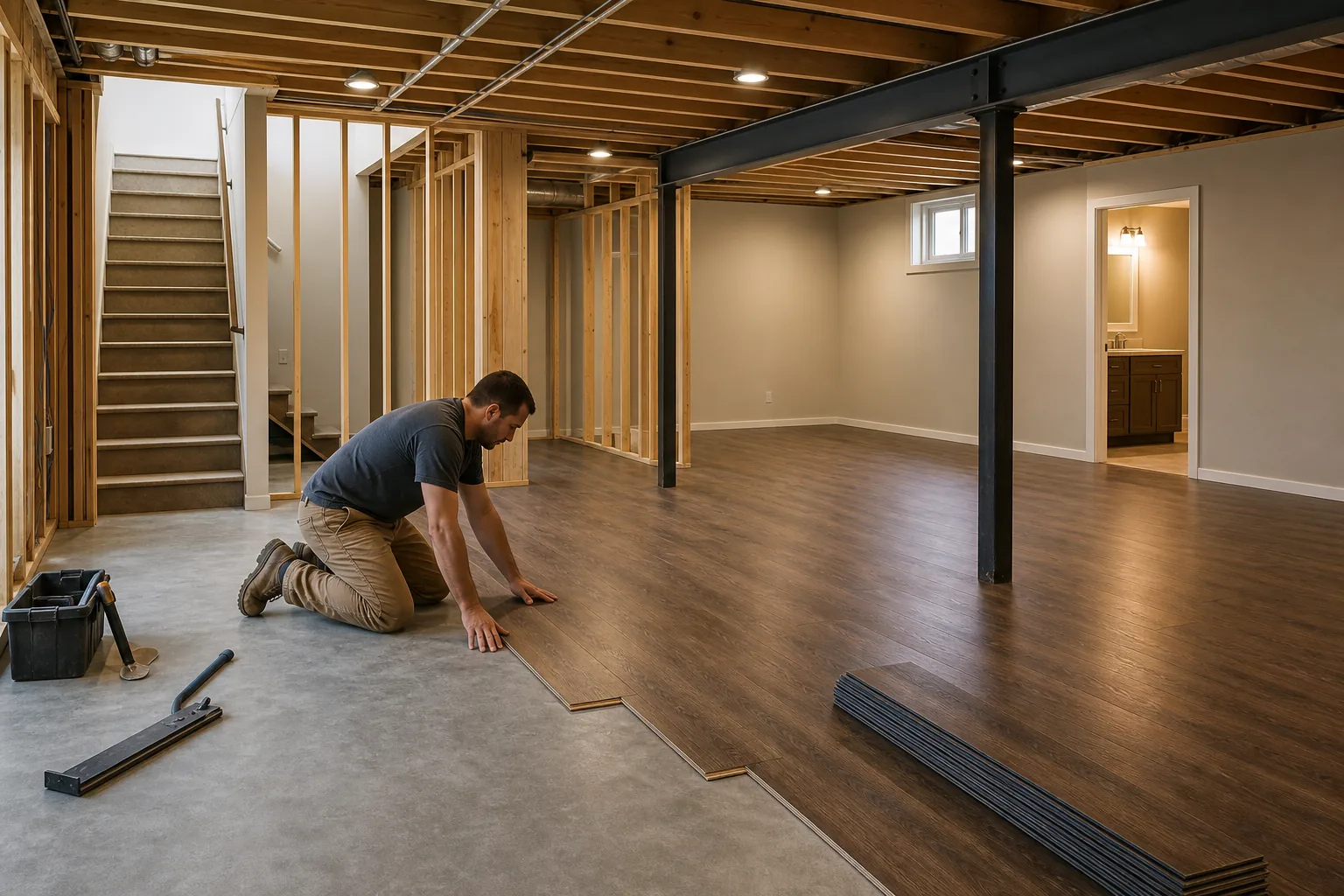
Our basement flooring options guide can help you compare surface types before we discuss the layout and finish plan.
We start with the space itself. A basement family room may need a warm surface underfoot. A home gym may need a tough coating. A rental suite may need a finish that cleans up fast after spills. We also look at door swings, floor height, transitions, stairs, and the location of floor drains.
That full view can prevent a common mistake: choosing flooring before checking the slab. Concrete can look dry while moisture vapor still moves through it. If that moisture gets trapped, seams may fail, adhesives may loosen, and some materials can warp or develop odor.
We also keep the finish aligned with the rest of the remodel. The result should feel like part of the home, not a floor added after the main work is done. For Northern Utah homeowners, LIFT Construction can manage basement finishing and flooring from start to finish.
2. SPC Rigid-Core LVP, A Waterproof Plank for Most Utah Basements
SPC rigid-core LVP is the strongest all-around flooring choice for many Utah basements. Its core is waterproof at the plank level, and it can float over concrete without adhesive.
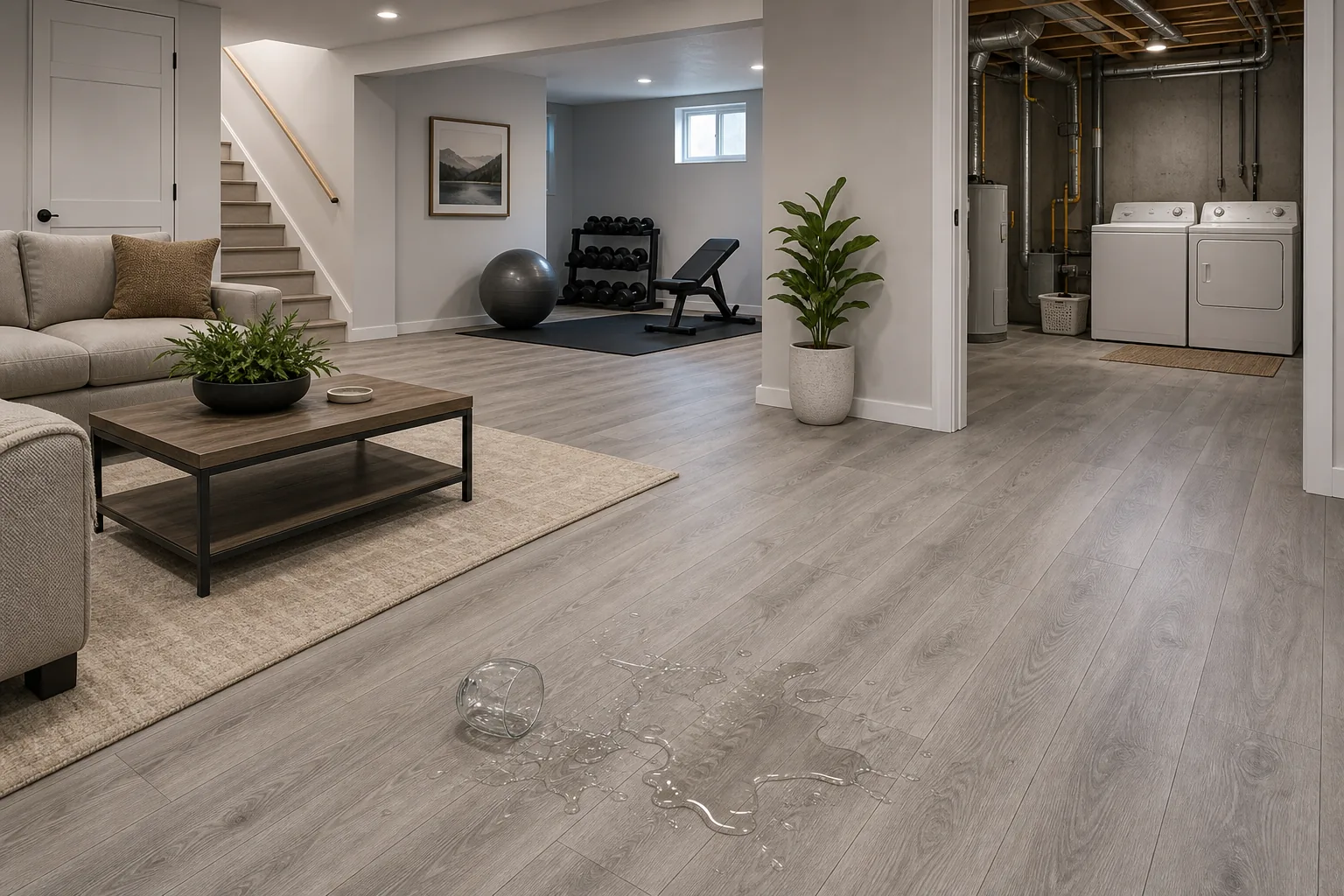
This makes SPC a good match for a basement family room, playroom, office, or hall. The floating installation can also make future removal simpler than a fully bonded floor. Its hard core handles daily traffic better than softer plank types, though the slab still needs proper moisture checks first.
Waterproof planks do not make a wet basement safe. Moisture can still move through concrete and collect below a floating floor. That is why we recommend checking the slab before installation, then addressing cracks, seepage, or vapor concerns before the first plank goes down.
The basic properties of concrete help explain the risk: concrete is a porous material, so a surface that looks dry does not prove that the slab is free of moisture.
SPC also works well when you want a wood look without the moisture risk of solid wood. It has less cushion than WPC, so an area where people sit or play on the floor may benefit from rugs or a softer underlayment approved for the product.
For most homeowners, SPC is the clearest starting point. Pick it when moisture control is sound, the room gets regular use, and you want a usable plank with a simple floating installation.
3. Flake Concrete Coating System for Multipurpose Basement Spaces
A flake concrete coating system is a practical option for Utah homeowners finishing a basement and planning a home gym, playroom, or multipurpose basement space.
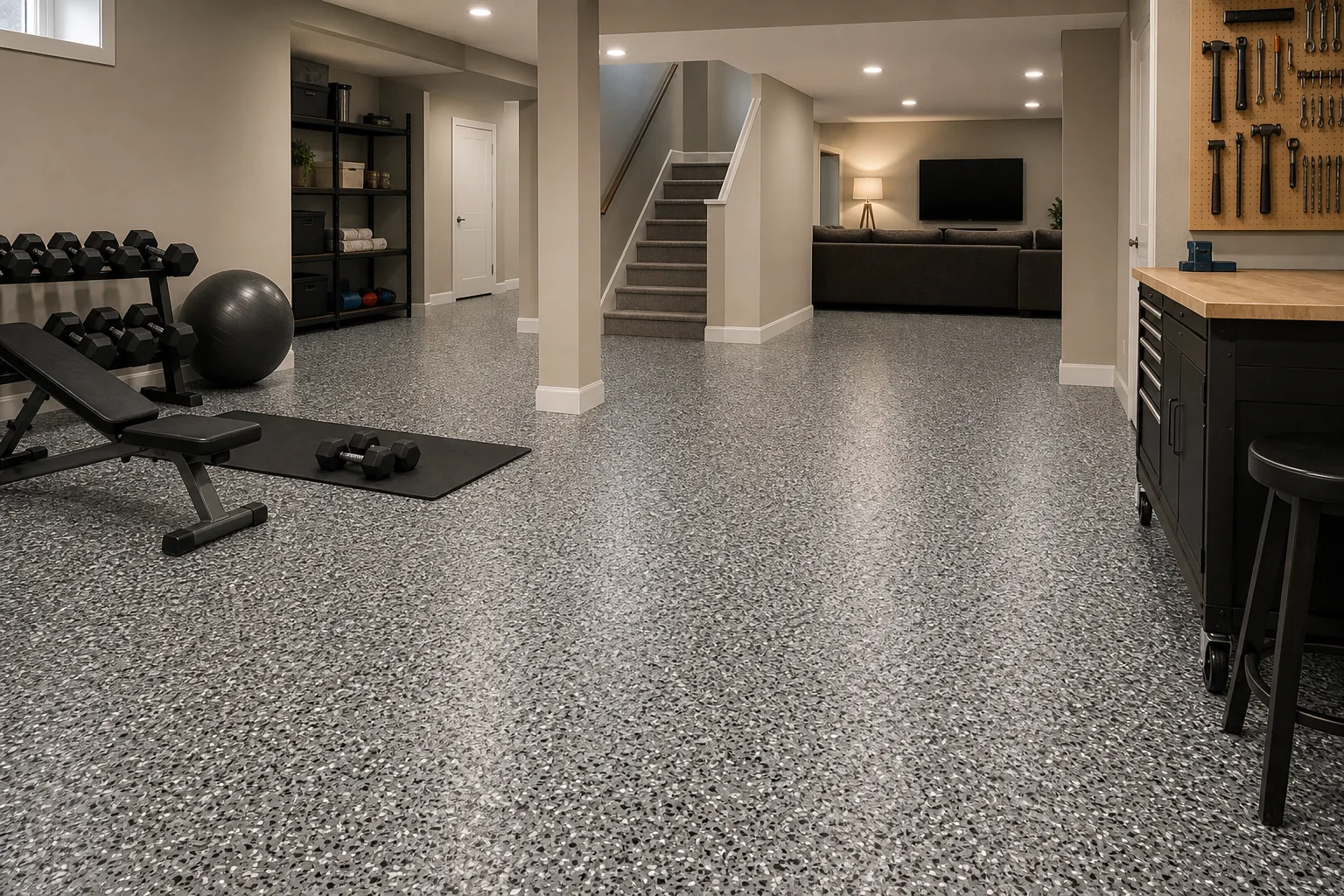
Its best uses include areas designed for flexible everyday activity. Consider this option when the basement needs to support more than one purpose, such as a room that works as both a playroom and a home gym.
A flake concrete coating system can also suit a multipurpose basement space where the room’s use may change over time. Identifying how your family plans to use the room can help you decide whether this option fits the project.
For a basement remodel, start by matching the coating system to the finished room’s purpose. A home gym, playroom, or multipurpose basement space may each be a good setting for a flake concrete coating system.
Choose a flake concrete coating system when your basement plans include a home gym, playroom, or multipurpose basement space.
4. Tile, Long-Lasting Protection Against Surface Water
Tile is a strong choice for homeowners who want long service life and resistance to surface water. It suits entry zones, bathrooms, laundry rooms, wet bars, and basements with walkout doors.
Tile handles spills well because the finished surface does not absorb them like carpet. It also gives you many layout choices. Large-format tile can make a room feel calm, while smaller tile can add grip near a sink or exterior door.
The slab still controls the result. Concrete movement or settlement can crack tile or loosen grout. We look for cracks, uneven areas, and height changes before installation. The floor may need repair or leveling before tile is set.
Tile can also feel cold in a basement. Radiant heat may improve comfort, but that choice needs to happen before the finished floor goes in. Grout needs routine cleaning, and a textured tile may take more effort to mop than a smooth plank.
Homeowners should also know that water resistance at the tile surface does not equal a waterproof basement. The room still needs a dry envelope, sound drainage, and control of water at the slab and walls. The general construction of tile surfaces explains why the tile itself may resist water while joints and grout still need care.
Tile earns the spot when surface water is the main concern and a cooler, harder floor is acceptable. For a bedroom or playroom, we would compare it closely with LVP before making the final call.
5. Carpet, Warmth for Fully Waterproofed Utah Basements
Carpet can be one of the best basement flooring options for a fully waterproofed space with excellent moisture control. It is warm, quiet, and soft underfoot, which makes it appealing for bedrooms, media rooms, and family spaces.
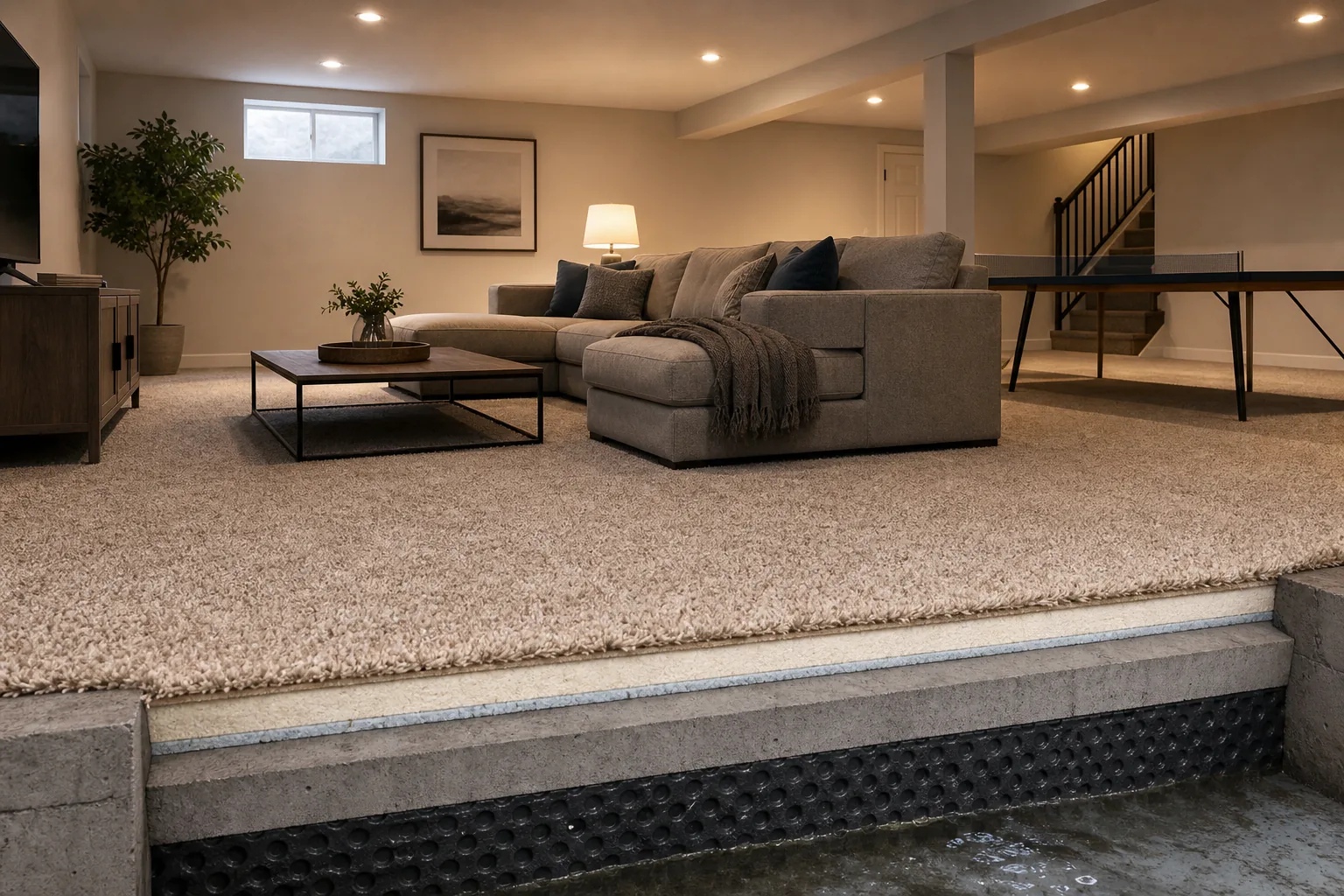
That recommendation has a firm condition. Carpet should not go into a basement with active seepage, repeated dampness, or an untested slab. It absorbs moisture and dries slowly after a leak. Mold can grow when damp materials stay wet, which is why moisture guidance focuses on finding and fixing moisture problems first.
We prefer carpet in areas where comfort and sound control matter more than fast cleanup. A low-pile style is easier to maintain than a deep pile. A modular flooring format can also make spot replacement simpler if one area gets stained, though the floor system below still needs moisture protection.
Use a proper barrier or subfloor system when the design calls for carpet over concrete. Do not assume a pad alone solves vapor movement. The barrier, slab condition, and room humidity all need to work together.
Carpet is a poor choice for a basement gym, storage area, or room with a history of leaks. It becomes a smart choice only after waterproofing and moisture control are settled.
Basement Flooring Options Comparison: Best Uses, Moisture and Comfort
The right floor depends on how the room works each day. This comparison puts moisture tolerance beside comfort and installation needs, so the choice is easier to narrow down.
| Flooring option | Best use | Moisture position | Comfort | Main caution |
|---|---|---|---|---|
| LIFT Construction full-service finish | Whole basement remodel | Planned around site conditions | Selected by room | Needs a project consultation |
| SPC rigid-core LVP | Most living areas | Waterproof plank core | Medium | Test the slab first |
| WPC LVP | Conditioned lounges and bedrooms | Waterproof core | High | Can dent under heavy loads |
| Tile | Bathrooms and walkout zones | Resists surface water | Low without heat | Grout and slab movement |
| Carpet | Dry bedrooms and media rooms | Needs excellent moisture control | High | Slow to dry after leaks |
Cost varies with the product, prep work, room shape, and labor. Research for this topic found LVP examples in the $3 to $8 per square foot installed range, but a Utah project can move outside that range when the slab needs repair or the remodel includes other trades.
Installation also changes the budget. Floating LVP can be homeowner-friendly, while sheet vinyl with sealed seams and glue-down LVP usually call for more skill and careful moisture testing. If you want the full basement budget beside the flooring decision, review the cost to finish a basement in Utah before setting a finish allowance.
More basement flooring tips
Engineered Hardwood: A warmer wood look when basement conditions are controlled
Engineered hardwood gives a basement a genuine wood surface with more dimensional stability than solid hardwood. It belongs on the shortlist when the room is dry, well insulated, and carefully prepared.
Unlike solid wood, engineered hardwood is built in layers. That construction helps it respond better to normal changes in indoor humidity. It still contains real wood, though, so it isn’t a free pass for damp areas. A water problem below the slab can damage the floor and the finish.
This option fits a finished sitting room, office, or basement bedroom where appearance matters more than spill resistance. It can also connect the lower level to wood flooring used elsewhere in the house. That visual link makes stairs and open transitions feel more planned.
We pay close attention to the floor’s location before recommending it. A walk-out basement with good drainage may be a better candidate than a fully buried room that stays damp. The floor should also be kept away from known plumbing risk zones unless the room has a plan for leaks.
Installation can be floating or bonded, depending on the product. Either way, the slab must meet the manufacturer’s requirements for moisture and flatness. Skipping that check is a poor place to save money because a wood floor can show movement, gaps, or finish problems later.
Engineered hardwood is a design-led choice. Pick it for a controlled room where you want a warmer, richer surface. Don’t pick it for the basement bathroom or the spot beneath a sink.
When homeowners in Northern Utah want wood underfoot but need a clear plan for the full remodel, we coordinate that choice with the rest of the room, from start to finish.
Inspect and Prepare the Utah Basement Slab
The goal is to find water problems before a barrier hides them. A moisture sheet can’t fix seepage, leaks, or a cracked slab that still lets water through.
Start after a stretch of dry weather. Look for dark spots, white powdery deposits, damp edges, and cracks. Pay close attention to wall joints, support posts, plumbing areas, and floor drains. A musty smell also deserves attention, even when the slab looks dry.
Check the room after rain or snowmelt if you can. Utah basements face different moisture risks by area. A home near a high water table may need more work than a dry basement on a sloped lot in Northern Utah.
Next, remove dust, loose paint, old adhesive, and bits of concrete. Scrape high spots. Fill small cracks with a compatible concrete repair material, following its label. Do not cover an active leak with plastic. Stop and fix the source first.
Use a straightedge across the slab. Mark ridges and dips that could telegraph through the finished floor. Your flooring type sets the tolerance. Luxury vinyl plank may show ridges over time, while a floating floor needs a fairly even base to keep its joints locked.
Record the room’s length and width after cleanup. Measure alcoves separately. Include columns, steps, and utility areas so the barrier plan matches the floor plan.
Basement insulation guidance treats moisture control as part of the floor and wall assembly, not as a last-minute coating. That same order works well for Utah projects.
We recommend bringing in LIFT Construction when you find standing water, repeated seepage, mold, or a major crack. We can help plan the basement finish around the actual condition of the room, from start to finish.
By now you should have a clean slab, a written repair list, and measurements that account for every edge and obstruction.
Measure, Cut, and Lay the Barrier Over the Slab
The goal is full coverage with enough overlap to seal every joint. Plan the layout before you spread the first sheet.
Measure the slab again. Add the amount needed to run the sheet up the perimeter wall, based on the flooring system’s instructions. If the floor manufacturer gives a different dimension, follow that instruction. Mark each sheet with chalk before cutting.
Cut on a clean surface. A sharp utility knife makes a straighter cut and puts less stress on the plastic. Keep the sheet away from rough debris while you work. A tiny stone under the barrier can become a tear when someone walks across it.
Lay the first sheet along the longest straight wall. Keep it flat without pulling it tight. A little slack helps the material stay in place as the room changes temperature.
Set the next sheet beside it with the overlap required by the barrier maker or flooring maker. Stagger joints when the layout allows it. Avoid a four-corner meeting point where several seams would stack together.
Work toward the doorway last. This gives you a clean path into the room and reduces the chance of stepping on an unprotected seam. If you must walk across the plastic, use clean soft-soled shoes.
Trim around posts and fixed items with care. Leave enough material to seal the cut later. Don’t make a tight star-shaped cut around a pipe. That shape can open when the pipe shifts or the sheet moves.
Keep the plastic out of places where it could block a drain or hide a service opening. Floor drains need a planned detail, not a loose flap.
By now the slab should be covered without wrinkles that could affect the floor. The sheets should also have enough overlap for the next step.
FAQ About Basement Flooring Options in Utah
What is the best flooring for a Utah basement?
SPC rigid-core LVP is the best general choice for many Utah basements because its plank core is waterproof and it floats over concrete. The slab still needs moisture testing before installation. Tile works well near water, while WPC suits conditioned rooms where comfort matters. Carpet fits only after the basement is fully waterproofed.
Is LVP good for basements in Utah?
Yes, LVP is good for many Utah basements when the concrete slab is dry enough for the selected product. SPC is the safer pick for broad use because it has a rigid waterproof core. Standard water-resistant LVP can work too, but seams and trapped vapor deserve close review before installation.
Can you put carpet in a Utah basement?
Yes, you can put carpet in a Utah basement after moisture problems are fixed and the slab has excellent control. Carpet brings warmth and helps reduce sound, but it absorbs water and dries slowly. Use a suitable barrier or subfloor system, then keep basement humidity under control.
Is tile or LVP better for a basement?
Tile is better where surface water, long wear, or a walkout entry drives the choice. LVP is better when you want warmer comfort, a wood look, and simpler installation. Tile can feel cold and may crack if the slab moves. LVP still needs moisture testing beneath the floor.
Should basement flooring go directly over concrete?
Some flooring can go over prepared concrete, but the slab must meet the product requirements first. Floating SPC and WPC may work over concrete, while carpet often needs a proper barrier or subfloor. Check for damp spots, cracks, vapor concerns, and uneven areas before covering the slab.
Conclusion
For most Utah homeowners, we recommend starting with SPC rigid-core LVP after the basement slab passes moisture checks. Choose tile for wet zones, WPC for added comfort, or carpet only in a fully waterproofed room. If the floor is part of a larger remodel, LIFT Construction’s basement finishing services can help coordinate the work from start to finish.